Car Accident Property Damage Claim: File Checklist
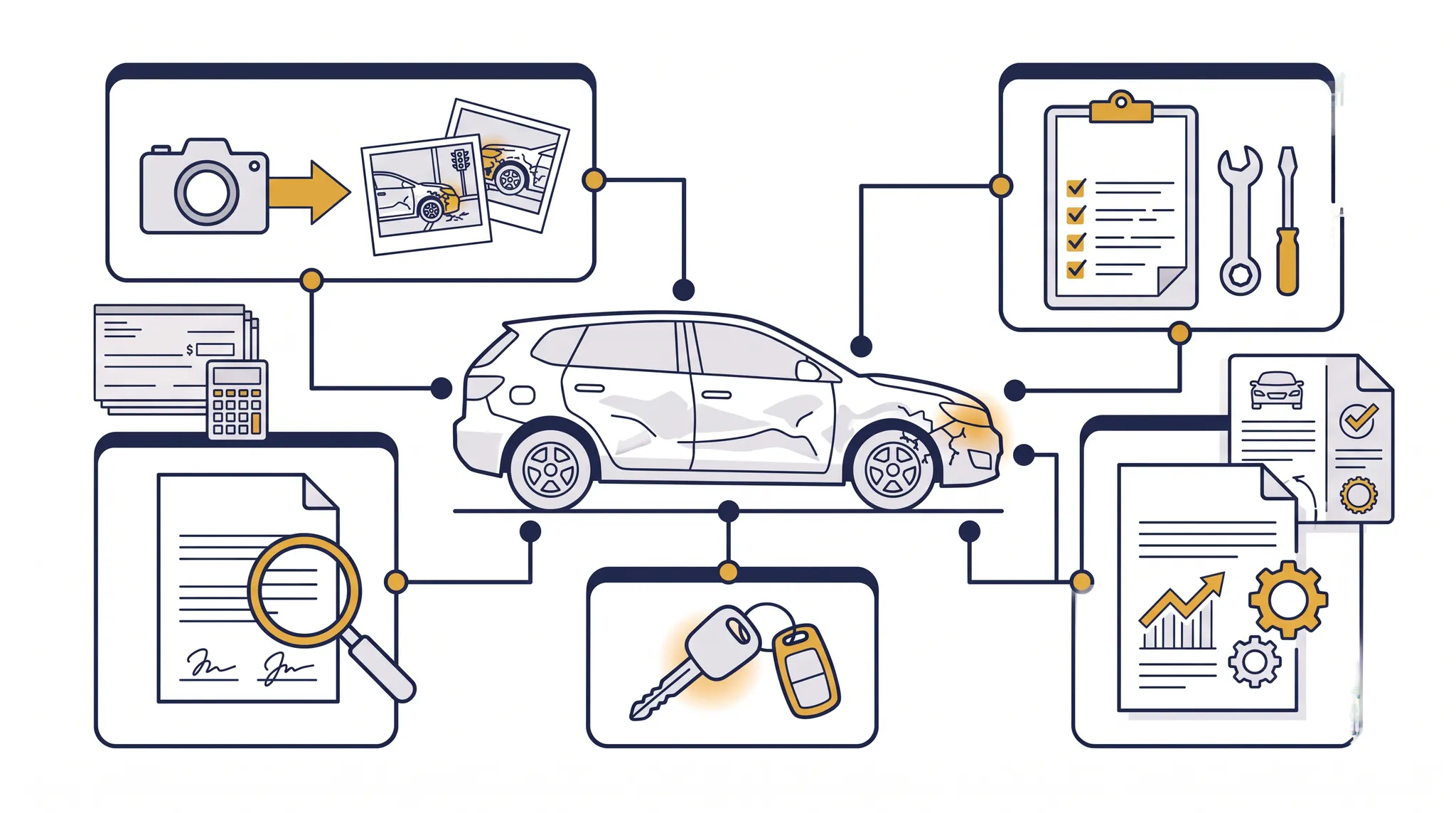
A car accident property damage claim should be built as a traceable file, not a single repair bill. Record the vehicle’s pre-crash condition, collision damage, repair or total-loss decision, towing and transportation costs, every insurer position, each payment, and the exact scope of any release. The goal is to make every requested dollar and every unresolved issue easy to verify.
This article focuses on controlling the property file from notice through closure. It is different from estimating an “average settlement”: the central question is whether the documents, dates, scope, and payments reconcile.
1. Open the claim with one verified fact sheet
Create a one-page claim cover sheet before documents scatter across emails and portals. Record:
- collision date, time, location, and claim numbers;
- each driver, vehicle, owner, and insurer;
- VIN, year, make, model, trim, mileage, options, and lienholder;
- whether the vehicle is drivable, where it is stored, and who has the keys;
- police or exchange-report information and witness contacts;
- the date each insurer received notice; and
- the adjuster, repair facility, tow yard, and preferred contact method.
Use neutral descriptions. “Left-rear door crushed and warning light illuminated” is more useful than “the whole car is ruined.” Qualified repair professionals determine structural and mechanical damage.
If physical symptoms are also developing, keep a separate injury chronology and consider speaking with a car accident lawyer. Do not let the vehicle file replace medical documentation.
2. Preserve condition evidence before the vehicle changes hands
Photograph the full vehicle from all sides, the impact area at several distances, the interior, dashboard warnings, odometer, tires, visible options, child seats or other damaged property, and the tow or storage location. Keep the original files with timestamps and avoid editing the only copy.
Then add the pre-crash baseline: recent photos, maintenance and repair records, option lists, accessory receipts, prior-damage records, and any recent major work. The baseline matters because a repair or valuation dispute often turns on what existed before the collision.
Use this evidence index:
| Evidence group | What to save | What it helps answer |
|---|---|---|
| Crash condition | Scene, debris, impact points, vehicle positions | What was damaged in this event? |
| Vehicle identity | VIN, trim, mileage, options, title or registration | Is the correct vehicle being evaluated? |
| Pre-crash condition | Maintenance, prior photos, prior damage | What condition existed before the loss? |
| Custody | Tow authorization, location, key transfer, storage notices | Who controlled the vehicle and when? |
3. Separate responsibility, coverage, and repair scope
These are three different questions:
- Responsibility: Who may be legally responsible for the collision?
- Coverage: Which policy provision or liability coverage may respond?
- Scope: Which damage and related costs are attributed to this collision?
A claim number does not answer all three. Ask the insurer to state in writing whether responsibility is accepted, which coverage is being used, what deductible applies, and which items remain under investigation.
Nevada law provides that an insured or claimant may have motor-vehicle repairs performed at a licensed body shop of their choice, and the insurer must notify the person of that right when first contacted about the damage. That does not make every proposed charge automatically covered. Preserve the insurer estimate, shop estimate, parts position, repair procedure, and any written disagreement.
4. Audit a repairable-vehicle file from estimate to delivery
The first estimate may be based on visible damage. A supplement may follow after disassembly, scanning, measurement, or parts review. Number the documents in sequence rather than replacing the first estimate with the latest one.
| Repair checkpoint | Document | Control question |
|---|---|---|
| Initial inspection | Insurer and shop estimates, photos | Do both identify the same impact area and operations? |
| Teardown or diagnosis | Supplement, scans, measurements | What newly documented damage changed the scope? |
| Authorization | Approval, partial approval, or denial | Which items remain disputed, and why? |
| Repair | Parts invoices, status updates, delay notices | Does the timeline explain vehicle unavailability? |
| Delivery | Final invoice, calibration or alignment records, warranty | Does the completed work match the paid scope? |
At pickup, inspect fit, finish, warning lights, steering, braking, sensors, and obvious new damage. Do not diagnose technical problems yourself; document concerns and ask the qualified facility to inspect them.
5. Audit a total-loss file against the actual vehicle
For a total-loss claim, request the complete valuation report—not only the offer amount. Check the VIN, trim, drivetrain, mileage, factory options, condition ratings, prior-damage deductions, comparable vehicles, geographic area, taxes and fees, deductible, salvage treatment, and lienholder payoff.
Nevada’s automobile-claim standards require total-loss valuation adjustments and deductions to be supported, documented, and itemized. Nevada also uses a statutory total-loss definition tied to repair cost and pre-damage fair market value, with specified exclusions and exceptions. Because title, salvage, and insurance questions can interact, review the current documents rather than relying on a remembered percentage.
Build a correction table:
| Valuation entry | Report says | Your supporting record | Requested correction |
|---|---|---|---|
| Trim or options | VIN decoder, window sticker, photos | ||
| Mileage | Odometer photo, service record | ||
| Condition | Pre-crash photos, maintenance | ||
| Comparable | Dated listing and differences | ||
| Deduction | Itemized explanation requested |
A lender payoff can consume part or all of the payment. Confirm who receives the check, what title documents are required, whether optional gap coverage exists, and when storage responsibility changes.
6. Track towing, storage, transportation, and other property separately
Do not bury every expense inside “vehicle damage.” Maintain a dated ledger for towing, storage, rental, rideshare, transit, personal-property damage, and other claimed costs. Attach the invoice, proof of payment, authorization status, and the reason the cost continued.
For a focused transportation record, use our guide to a rental car after an accident. Ask in writing when authorization starts, what rate or vehicle class is approved, and what event ends payment.
Respond promptly to tow-yard and storage notices. Document who authorized movement, where the vehicle went, and when an insurer described it as repairable or a total loss. Avoidable storage charges can become a separate dispute.
7. Reconcile every offer and payment before signing anything
Create a closing statement that lists each claim component, the amount requested, amount allowed, prior payments, deductible, lien payoff, direct payments to vendors, unresolved balance, and supporting document.
| Component | Requested | Allowed | Paid to | Unresolved reason |
|---|---|---|---|---|
| Vehicle repair or value | ||||
| Towing and storage | ||||
| Transportation | ||||
| Other property | ||||
| Taxes or fees |
Never assume a check memo, portal button, or release applies only to property damage. Identify the collision date, vehicle, payer, parties, claim categories, disputed balances, and rights the document would end. If the carrier denies an item, request the factual and coverage basis in writing and use the issue checklist in our car accident claim denial guide.
8. Close the property file only when five answers match
Before treating the claim as complete, confirm:
- Identity: Was the correct vehicle and pre-crash condition used?
- Scope: Does the repair or valuation record cover the collision-related damage?
- Timeline: Do custody, repair, total-loss, and transportation dates align?
- Money: Can every deduction, vendor payment, reimbursement, and balance be traced?
- Release: Does the written closure match only what you intend to resolve?
If property damage, disputed responsibility, or a broad release is complicating an injury claim, start the 60-second case evaluation and bring the claim cover sheet, estimates, valuation, expense ledger, payments, and proposed release.
This article provides general information, not legal advice. Insurance coverage, repair obligations, valuation, reimbursement, deadlines, and legal rights depend on the policy, current law, jurisdiction, and specific facts.
Frequently Asked Questions
What should a car accident property damage claim include? +
Include crash and vehicle photos, ownership and vehicle details, the initial estimate and supplements, repair or total-loss records, towing and storage invoices, transportation receipts, insurer communications, payment breakdowns, and any proposed release.
Can I choose my own repair shop in Nevada? +
Nevada law states that an insured or claimant may have repairs made at the licensed body shop of their choice, and the insurer must notify them of that right when first contacted about vehicle damage. Coverage, estimate, and repair disputes still depend on the policy and facts.
What should I check in a total-loss valuation? +
Verify the VIN, year, trim, mileage, options, pre-crash condition, adjustments, comparable vehicles, taxes and fees, deductible treatment, lien payoff, salvage handling, and the documents required before payment.
Does a property damage payment end an injury claim? +
Not necessarily. Property damage and bodily injury can be handled separately, but a release may be broader than expected. Read the written scope and identify every claim and party being released before signing.
Injured in a Las Vegas accident?
Find out what your case is worth in under 60 seconds. Free, confidential, no obligation — and no fee unless we win.
Check My Case in 60 Seconds