Car Accident Release of Liability Form: What to Review
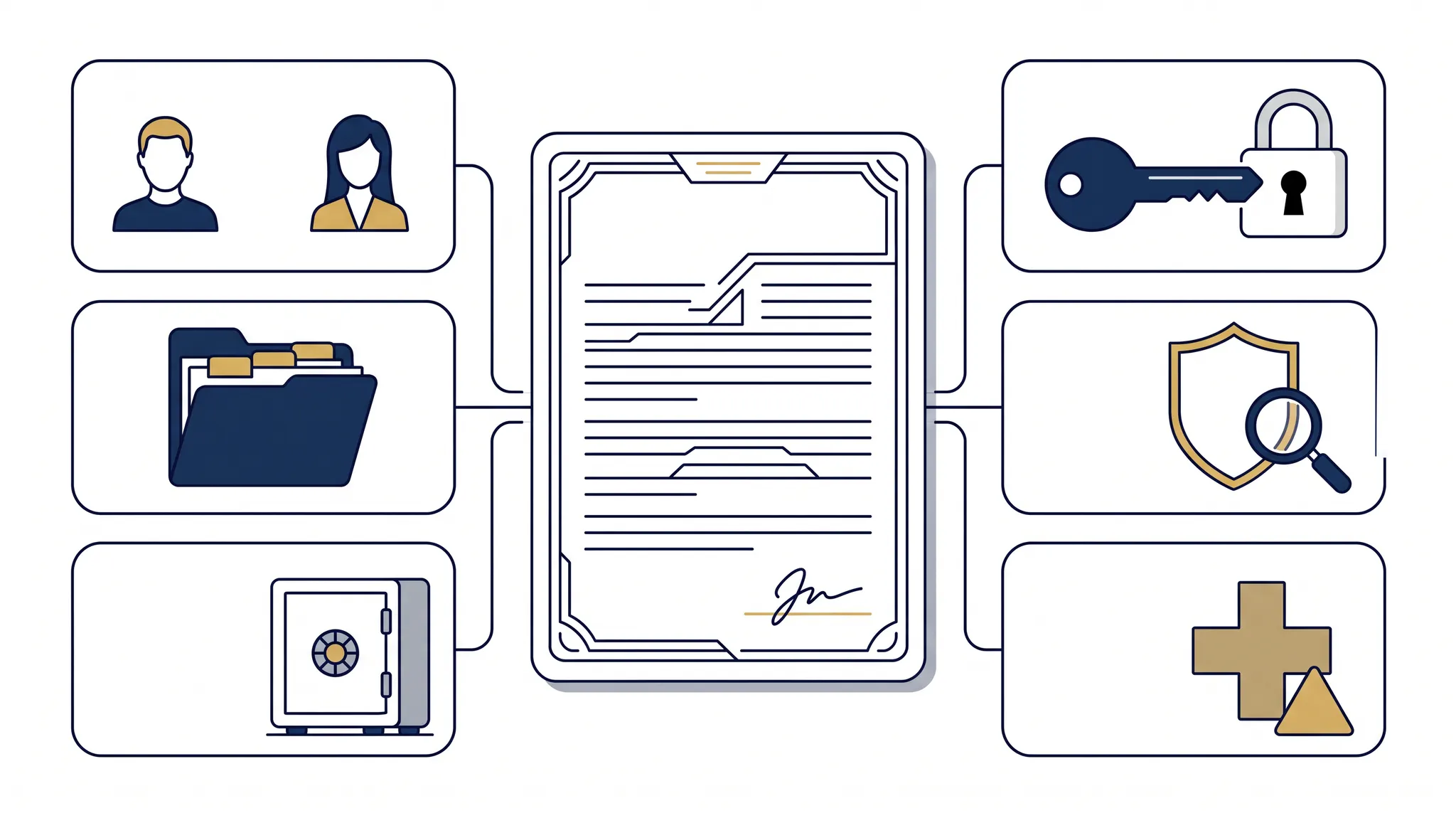
A car accident release of liability form is a contract that can permanently close the claims described in it. Before signing, confirm exactly who is released, which losses are covered, what payment is promised, whether unknown injuries are included, and whether any rights remain. Do not rely on the document title or a verbal summary.
This guide is a review framework, not a fill-in-the-blank form. A generic form cannot determine which parties, insurance policies, injuries, liens, or future claims matter in a particular collision.
Start with the exchange the release is supposed to make
A release normally trades legal rights for consideration, often a settlement payment. Put the exchange into one plain sentence before reviewing the clauses:
In return for a specific payment or promise, a specific person gives up specific claims against specific parties.
If any part of that sentence is unclear, the document is not ready for a signature. Compare the release with the written settlement offer, any email confirming terms, and the final payment instructions. The settlement-offer review guide explains how to test the proposed amount, deductions, and release scope together.
| Review point | What to locate in writing | Why it matters |
|---|---|---|
| Payment | Gross amount, payee, deadline, delivery method, conditions | A promise to pay should be definite |
| Released claims | Property, bodily injury, medical payments, wage loss, consortium, or all claims | Broad wording may reach beyond the issue discussed |
| Released parties | Drivers, owners, employers, insurers, affiliates, agents, unknown persons | A release can protect more parties than the signer expects |
| Effective event | Signature, delivery, payment, or clearance of funds | It identifies when rights may end |
| Exceptions | Expressly preserved claims, policies, parties, or obligations | Silence may not preserve what the signer intended to keep |
Identify every person and company protected by the form
Look beyond the names at the top. Definitions may expand a single named driver into a long group that includes vehicle owners, employers, insurers, parent companies, subsidiaries, agents, representatives, heirs, successors, and assigns.
Create two columns. In the first, list every person or entity expressly named. In the second, list each defined category that could add unnamed parties. Then compare those lists with the collision facts:
- Who drove and owned each vehicle?
- Was anyone working, delivering, transporting passengers, or acting for a company?
- Could a rideshare, commercial, rental, household, employer, or umbrella policy apply?
- Are multiple injured people or multiple claims involved?
- Does the release include people whose responsibility has not been investigated?
A broad party definition can end a claim before all responsible sources are known. A car accident lawyer can investigate the parties, insurance, and release as one file rather than treating the signature page in isolation.
Separate property damage from bodily-injury claims
One common risk is assuming that a payment for vehicle damage closes only property damage. The controlling language may release “all claims,” known and unknown, arising from the collision. That phrase may be broader than the payment discussion.
Use a scope table:
| Claim category | Is it expressly released? | Is it expressly preserved? | Is the file complete enough to decide? |
|---|---|---|---|
| Vehicle repair or total loss | Check the operative clause | Record any reservation | Confirm valuation and related expenses |
| Rental, towing, storage, personal property | Check included losses | Preserve unresolved items in writing | Reconcile receipts and insurer decisions |
| Bodily injury and medical expenses | Look for injury and unknown-claim language | Do not assume silence preserves it | Confirm diagnosis, treatment, and outlook |
| Lost income and reduced work capacity | Check economic-loss language | Identify any express exception | Reconcile restrictions and wage proof |
| Other insurance rights | Check UM/UIM, MedPay, health-plan, or subrogation effects | Confirm any policy-specific reservation | Review all potentially applicable coverage |
Do not sign a purported property-only release unless the operative language is actually limited to property claims and the intended injury rights are preserved clearly.
Treat unknown-injury language as a major decision point
Symptoms, diagnoses, treatment response, and work restrictions can change after a crash. A release may state that the signer accepts the risk of unknown, unsuspected, future, or more serious injuries. That language is designed to create finality even if later information changes the picture.
Before signing, ask:
- Has the person reached a medically informed point where the current condition and likely future needs can be evaluated?
- Are referrals, imaging, procedures, rehabilitation, or work restrictions still unresolved?
- Are the records complete enough to distinguish temporary symptoms from a longer recovery?
- Does the payment account for known medical balances, possible reimbursement claims, and supported future needs?
- Is the signer accepting the risk that the claim cannot be reopened?
These are not reasons to prolong treatment for a claim. They are reasons not to use a final contract as a substitute for medical clarity.
Audit the payment and every deduction before releasing rights
The amount printed in a release may be the gross settlement, not the amount the claimant receives. Build a written gross-to-net estimate that separates:
- attorney fees, if represented;
- case costs;
- medical balances;
- liens or reimbursement claims;
- prior advances or funding payoffs;
- disputed deductions; and
- the expected client distribution.
Confirm whether signing is required before the insurer issues payment, whether payment is due within a stated period, who the check will name, and what happens if funds do not arrive or clear. If the claim has already resolved and the issue is disbursement, the car accident settlement check guide covers the payment path in more detail.
Check clauses outside the main release paragraph
Important terms may appear near the end of the document. Review provisions on:
- confidentiality or non-disparagement;
- indemnity, including promises to repay or defend another party;
- responsibility for medical liens and reimbursement claims;
- representations about other claims, insurance, bankruptcy, or prior assignments;
- tax reporting or tax characterization;
- governing law, venue, arbitration, and attorney fees;
- authority to sign for a minor, estate, spouse, business, or another person;
- integration clauses stating that no outside promise is part of the agreement; and
- severability, amendment, electronic signature, and counterpart clauses.
A clause can create a new obligation even when it is not labeled “release.” Mark every sentence that requires the signer to pay, protect, confirm, disclose, waive, or promise something.
Use a final six-question release audit
Do not sign until the written document answers all six questions consistently:
- Parties: Who receives protection, including defined and unnamed groups?
- Scope: Which events, losses, policies, and claims end?
- Payment: What is promised, when is it due, and what is the expected net?
- Medical uncertainty: What known or unknown injury risk is being accepted?
- Insurance rights: Could the release affect another policy, claimant, lien, or reimbursement right?
- Finality: What rights remain after signature, if any?
Keep the final signed release, settlement correspondence, payment proof, deduction statement, and any written reservation together. Never leave blanks in a signed document, and do not rely on a promise that an important exception will be added later.
Before signing a release that may close an injury claim, request a free 60-second case evaluation.
This article provides general information, not legal advice. Contract effect, enforceability, insurance rights, liens, deadlines, and available claims depend on the document, jurisdiction, policies, parties, and facts. A licensed attorney should review a proposed release before signature.
Frequently Asked Questions
What does a car accident release of liability form do? +
It generally gives up specified claims against identified people, companies, or insurers in exchange for payment or another promise. The exact effect depends on the document's language, the claims covered, applicable law, and the facts.
Can I sign a property-damage release and keep an injury claim? +
Sometimes a release is limited to property damage, but the title is not enough. Read the operative clauses, definitions, listed parties, and all-claims language to confirm whether bodily-injury or unknown claims are also included.
Can I reopen a car accident claim after signing a release? +
A valid release is often intended to be final. Undoing one can be difficult and fact-specific. Do not assume later medical findings, higher costs, or dissatisfaction with the amount will automatically reopen the claim.
Should I use a free car accident release template? +
A generic template may omit essential facts, release the wrong claims, or create unintended rights. The safer question is whether the final document accurately identifies the parties, dispute, payment, claims, exceptions, and governing terms for the specific matter.
Injured in a Las Vegas accident?
Find out what your case is worth in under 60 seconds. Free, confidential, no obligation — and no fee unless we win.
Check My Case in 60 Seconds